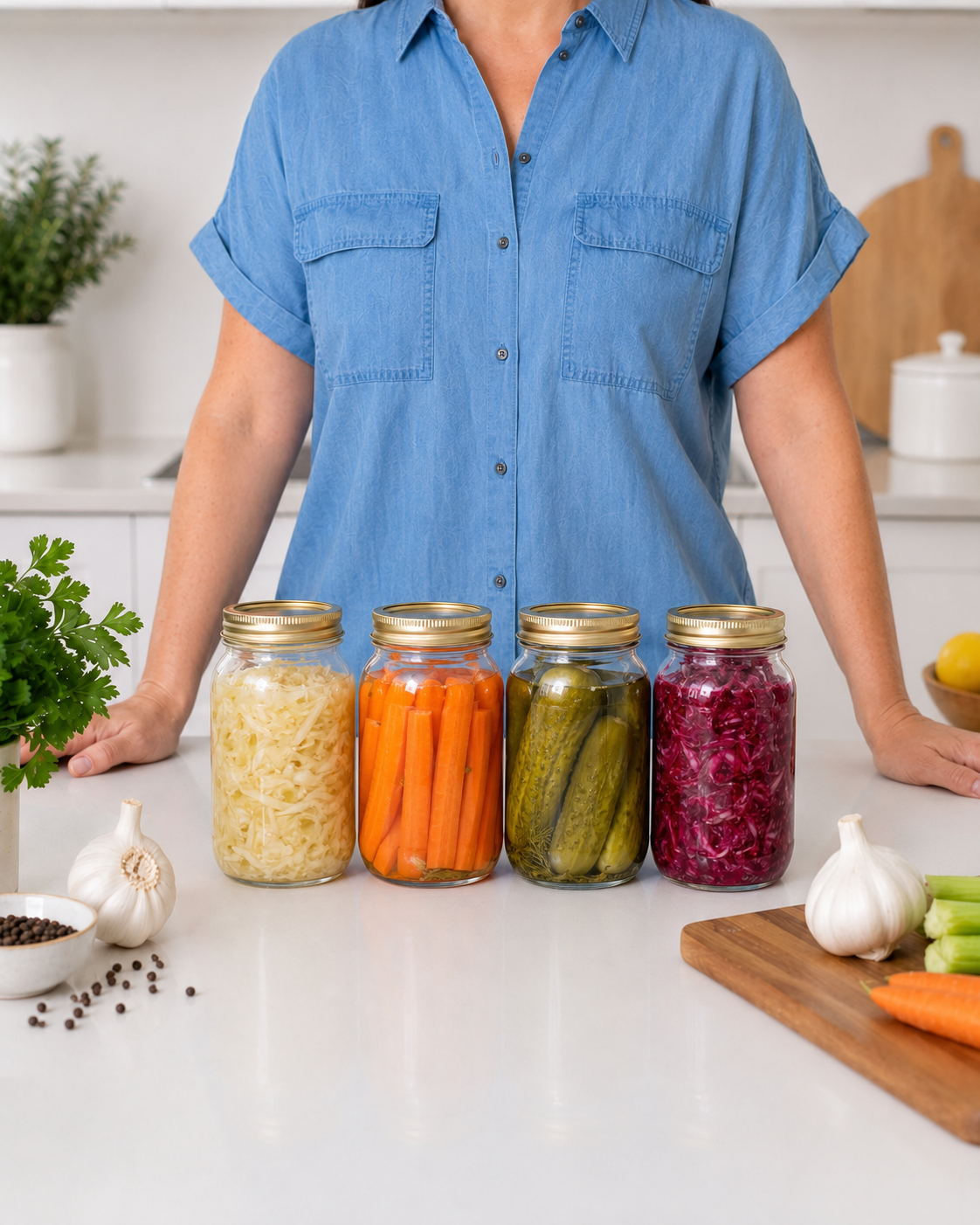
Fermented foods can be a wonderful addition to your family’s diet. They introduce beneficial microbes and organic acids, support a diverse gut environment and help children become familiar with a wider variety of flavours.
But let’s be honest: most children aren’t immediately excited by a forkful of sauerkraut or a glass of tangy kefir!
The good news is that you don’t need to force large portions or change everything overnight. A gentle, consistent approach can help fermented foods become a normal and enjoyable part of family life.
1. Introduce them early – but it’s never too late
Children naturally become comfortable with foods they see and taste regularly. When sour and tangy flavours are introduced early, they are more likely to become a familiar part of a child’s palate., but don’t worry if your children are older. Their tastes can still change. Keep offering fermented foods without pressure, even if they only taste a tiny amount at first.
Familiarity often comes before enjoyment.
2. Begin with the tiniest taste
With fermented foods, more isn’t necessarily better – especially in the beginning.
Start with a teaspoon of milk kefir blended into a smoothie, a small forkful of sauerkraut alongside a meal or a little cultured yoghurt served with berries.
Small amounts allow children to become accustomed to the flavour without feeling overwhelmed. They’re also gentler on a digestive system that may not be used to fermented foods.
Build up slowly and follow your child’s individual tolerance.
3. Start with familiar foods
One of the easiest ways to introduce fermented foods is to include them in meals and snacks your child already enjoys.
Try:
- Full-fat natural yoghurt topped with fruit
- Milk kefir blended into a smoothie
- A cultured yoghurt dip served with vegetable sticks
- A little sauerkraut alongside sausages, mince or roast meat
- Naturally fermented cucumber or carrot sticks
- A slice of traditionally prepared sourdough bread
A familiar base can make a new flavour feel much less intimidating.
4. Let them see you eating them
Children learn as much from what we do as from what we tell them.
If they regularly see you adding sauerkraut to your plate, drinking kefir or enjoying natural yoghurt, these foods begin to feel normal rather than strange.
Try to avoid labelling foods as something they “must” eat because they’re healthy. Instead, enjoy them together and talk about their interesting flavours and textures.
Your calm example is often far more powerful than persuasion.
5. Give them some ownership
Children are more interested in food when they have been involved in preparing or choosing it.
Let them:
- Choose which vegetables to ferment
- Help pack carrots or cabbage into a jar
- Select fruit for a kefir smoothie
- Stir herbs into a cultured dip
- Create their own yoghurt bowl
- Taste the ferment as its flavour develops
They may not love every creation – and that’s perfectly okay. The goal is to build curiosity and confidence around real food.
Child-friendly, fermented foods to try
Some fermented foods have a gentler flavour and can be easier for children to accept.
Milk kefir
Blend a small amount with berries, banana, vanilla or cinnamon to make a creamy smoothie. Gradually use less fruit as your child becomes familiar with kefir’s natural tang.
Full-fat natural yoghurt
Choose plain yoghurt without added sugar, sweeteners or unnecessary additives. Add fresh fruit, cinnamon or a small drizzle of raw honey for children over one year old.
Fermented carrot sticks
Their natural sweetness makes carrots a lovely first fermented vegetable. Serve them as a crunchy side or with a homemade dip.
Naturally fermented cucumbers
Look for traditionally fermented cucumbers made with salt and water rather than ordinary pickles preserved only in vinegar.
Sauerkraut
Begin with a tiny forkful alongside a familiar savoury meal. Some children prefer drinking a little of the brine before they enjoy eating the cabbage itself.
Cultured dips
Use full-fat yoghurt or kefir to make a simple dip with herbs, lemon, garlic and sea salt. Serve it with vegetables, meatballs or homemade chicken fingers.
Traditionally prepared sourdough
Properly fermented sourdough can be a gentle introduction to cultured foods because it already looks and feels familiar.
Keep it gentle
There is no need to pressure your child or expect them to enjoy every fermented food.
Continue offering small tastes, keep the experience relaxed and celebrate curiosity rather than how much they eat. Over time, these foods can simply become another normal part of your family table.
Small, consistent exposure is often where lasting food habits begin.
Renewing You Tip: Start with just one fermented food that suits your family. Offer a small amount regularly and allow your child’s palate—and gut—to adjust gradually.
X Carly
Carly Baar
Holistic Nutritionist & Certified GAPS Coach
Renewing You
www.renewingyou.co.za