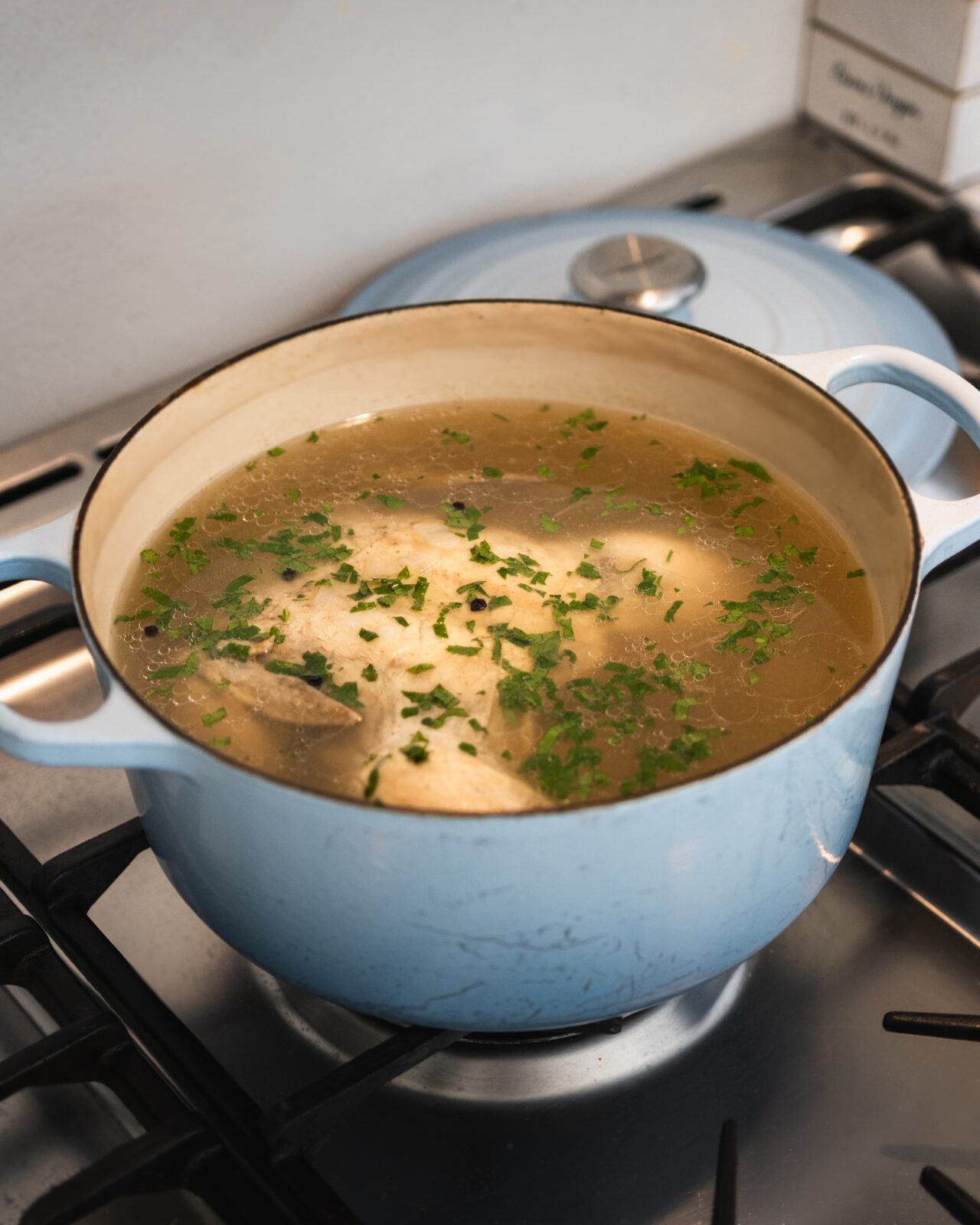
If you’re new to GAPS, one of the first questions that comes up is: what’s the difference between meat stock and bone broth?
They sound similar, but they serve different purposes at different stages of healing. Let’s walk through what makes each unique, how to prepare them, and when to use them for best results in a gut healing protocol (GAPS diet).
Why Stocks and Broths Are So Important on GAPS
Both meat stock and bone broth are at the heart of GAPS because they’re deeply nourishing and incredibly soothing to the gut lining. They don’t feed pathogens, they’re easy to digest, and they deliver the very building blocks your body needs to repair and seal the gut lining.
We’re talking about amino acids, collagen, gelatin, minerals, and healthy fats – all in a form that the body can absorb and digest with very little effort. This is why Dr. Natasha Campbell-McBride refers to them as healing foods.
Meat Stock: The Intro hero
Meat stock is often overlooked compared to bone broth, but it’s the real star of the Intro diet and my personal favourite.
As the name suggests, meat stock is made from meaty bones with joints (think drumsticks, wings, short ribs, or oxtail). The magic ratio is about 80% meat to 20% bone. Joints and connective tissue are especially rich in gelatin and gut-healing amino acids.
A big reason meat stock is used on Intro is that it’s low in glutamic acid, which can be irritating to sensitive people or to those whose gut lining is still leaky. By keeping things gentle, meat stock allows the gut to start sealing.
👉 Drink it liberally, 3–5 cups a day is ideal on Intro. This consistency is what helps repair the lining and allows you to move forward to later phases.
How to Make It:
- Place meaty bones in a pot or Dutch oven.
- Add just enough water to cover by a few cm’s.
- Season lightly with salt and pepper.
- I like to add some onion, celery and carrots for flavour (optional)
- Bring to a gentle simmer for 30 min, skim off the foam, cover, and cook on low for:
• 2 hours for chicken
• 4 hours for beef or lamb
When cooled, a good meat stock will gel – that’s the sign you’ve captured the healing power.
Bone Broth: The Long-Cooked Mineral Powerhouse
Bone broth has become famous in the wellness world, and for good reason. It’s made primarily from bones (with a little connective tissue if possible), simmered much longer than meat stock – anywhere from 24 to 72 hours.
But here’s the key for GAPS: bone broth is not for Intro. It’s introduced later, once the gut lining has healed, because it’s higher in glutamic acid, which can trigger symptoms in sensitive individuals early on.
When the time is right, though, bone broth is a mineral-rich powerhouse. It’s wonderful for long-term nourishment, especially on Full GAPS.
How to Make It:
- Save bones from your meat stock (freeze until you have enough).
- Roast at 180°C / 350°F for 30 minutes to deepen flavour.
- Add to a pot with water (about 1 litre per 450g bones). Less water = better gel.
- Add a splash of apple cider vinegar or lemon juice to draw minerals from the bones.
- Simmer gently for 24–72 hours, skimming occasionally.
Key points to remember:
- Meat stock: Intro diet must-have. Healing, sealing, lower in glutamic acid. Consume daily (3–5 cups).
- Bone broth: For later stages / Full GAPS. Higher mineral content, long simmer. Not suitable for Intro.
- Ratios: Meat stock = 80% meat, 20% bone. Bone broth = mostly bone, little meat.
- The gel matters: A wobbly gel means you’ve captured the healing amino acids and gelatin.
- Skip the boxed stuff: Store-bought broths and bouillons are not GAPS-compliant. They are processed and often contain additives.
If you remember one thing: meat stock heals, bone broth nourishes.
Start with meat stock on Intro, then once the gut is sealed, bring in bone broth as a beautiful addition to Full GAPS.
Both are deeply ancestral, deeply nourishing, and simple to prepare. And if you’re new to cooking them, don’t worry, with a little practice, these healing foods will soon become staples in your kitchen.
A Final Note of Inspiration
I’ll leave you with something Dr. Natasha Campbell-McBride once said that really stuck with me: “Even just adding one cup of meat stock a day can make a huge positive difference to your health.”
I absolutely love that. It’s such a gentle reminder that healing doesn’t always have to be complicated — even small, consistent steps can create real change in our bodies over time.